Vibe Coding for Kids Is a Starting Point, Not a Substitute
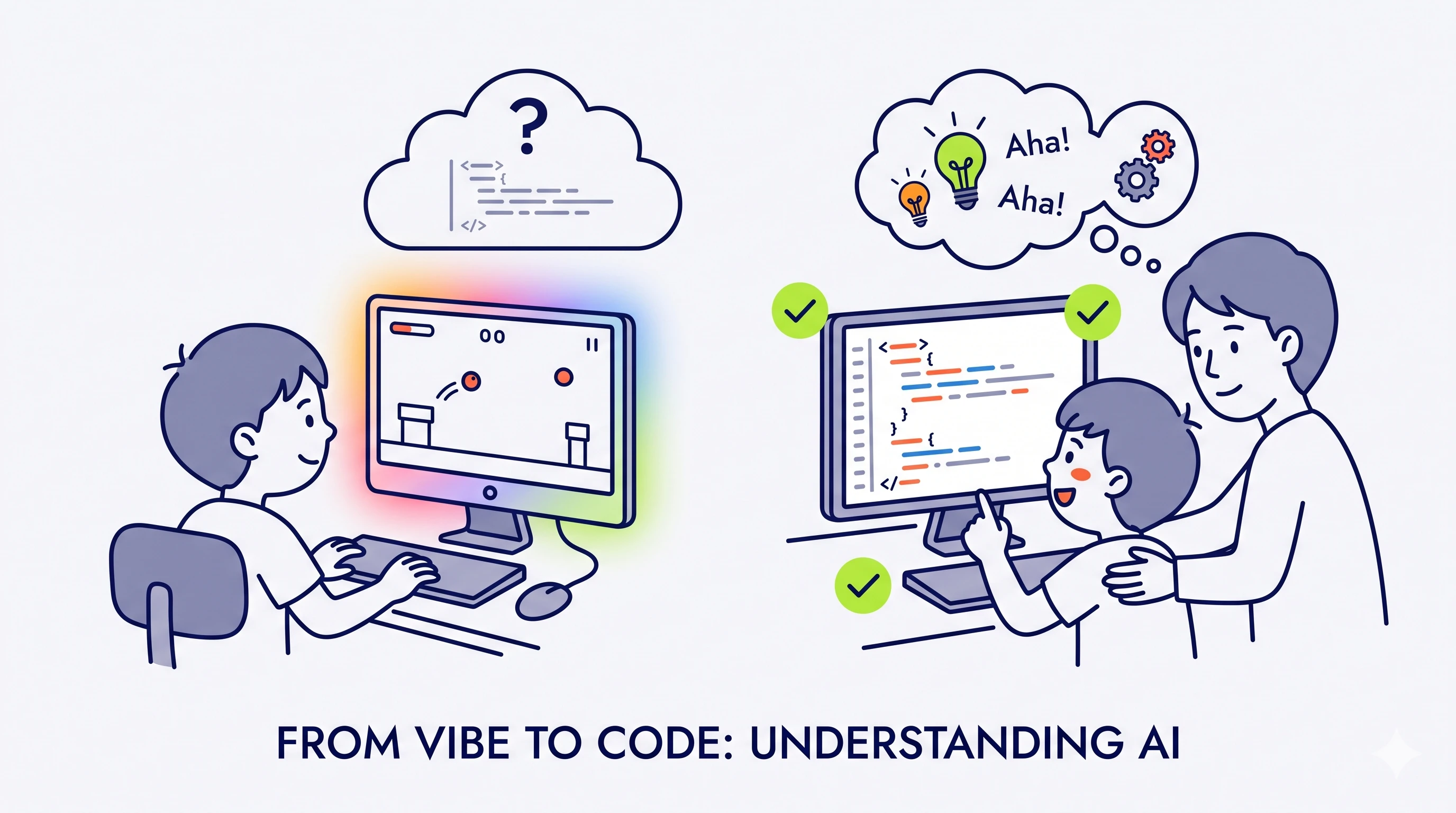
Vibe coding for kids is one of the most effective ways to make programming feel immediately exciting. Children can turn an idea into a working game in minutes, and that fast payoff is genuinely valuable. The risk is that when AI generates all the code, children often skip the step where real understanding forms. They reach an impressive-looking result without knowing how it works, why it works, or what to do when it stops working. At Strive Coding, we use vibe coding to start lessons, not end them.
When Vibe Coding Hides the Gaps
When a child prompts an AI to write code and the result works first time, there's no obvious reason to look deeper. The project is done and it looks good. But coding skill develops in the gap between what you expected and what actually happened. That gap is where debugging becomes intuitive, where logic becomes readable, and where children start to see code as something they can direct rather than something that generates outputs for them. Without that phase, vibe coding produces finished projects with shallow understanding underneath. When the AI misunderstands a prompt, or something needs changing, a child who hasn't studied the code can't troubleshoot. They can only prompt again and hope.
How Strive Coding Uses Vibe Coding for Kids
At Strive Coding, vibe coding is part of how lessons work, not a replacement for them. Students use AI tools to move quickly through initial creation and to experiment with ideas they don't yet have the vocabulary to implement from scratch. Then the lesson shifts: we go through the code the AI produced, line by line. Students ask why each function behaves the way it does. They predict what will happen when they change a value, then test it. For many of our students, this is the part they look forward to most. Not the AI output, but their own ability to understand it and then make it do something different.
How Parents Can Help at Home
Parents can reinforce deeper learning without knowing how to code themselves. The most useful questions focus on process rather than product. Ask your child what part of the code they changed and why. Ask what didn't work the way they expected. Ask what they'd do differently if they started the same project again. These questions shift the frame from "look what the AI built" to "look what I understand," and that shift is where the real learning lives.
What It Means to Teach Coding Well in an AI World
The goal at Strive Coding isn't to raise children who can outcode an AI. The goal is to raise children who can use AI with intention: children who know enough about how code works to direct the tool with purpose, evaluate its output critically, and build things the tool alone wouldn't think to build. Vibe coding for kids is most valuable when the curiosity it sparks leads somewhere deeper. At Strive Coding, every session is designed to make sure it does. Stories like Solene's, a 10-year-old who built her mum a working website as a birthday gift after two years of learning this way, show what that looks like when it works.